Information
Helene Nymann is a Danish visual artist and artistic researcher whose practice explores memory, imagination, and participation as collective and relational processes. Working across sculpture, installation, film, digital media, and participatory methods, she creates artworks that bring together artistic imagination, scientific research, and lived experience.
In a time of technological acceleration, cultural amnesia, and rising dementia, what can art do for memory?
Rather than treating memory as something stored within the individual mind, Nymann approaches it as something that unfolds between people, places, materials, and time. Her works invite visitors to become active participants, asking: How do we remember? What do we forget? Who shapes the stories we inherit? And how might we cultivate more sustainable ways of remembering—and carry those memories into the future?
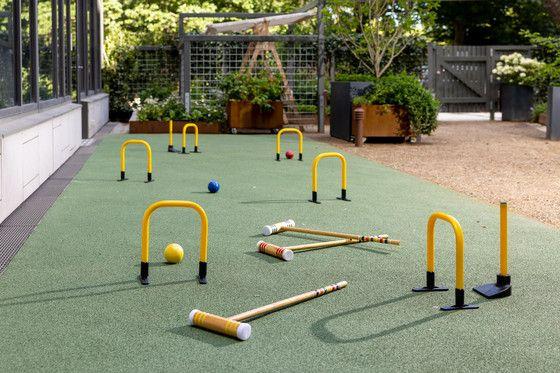 Image with a caption
The Dementia-Friendly Garden at Rigshospitalet is the latest chapter in this ongoing body of research. Developed in collaboration with the Danish Dementia Research Centre as part of the initiative Everyday Life with Dementia, the project brings together researchers, clinicians, healthcare professionals, patients, relatives, and visitors to explore how contemporary art can support new forms of care, participation, and collective remembering. While the spatial design of the garden has been developed by landscape architects, Nymann's artworks have emerged through interdisciplinary collaboration with neuroscientists, cognitive scientists, healthcare professionals, and people living with dementia and neurodiversity. Anatomical structures of the brain, studied through fMRI imaging, are brought into correspondence with elements of the landscape, while workshops, conversations, and shared experiences continually shape the artworks themselves.
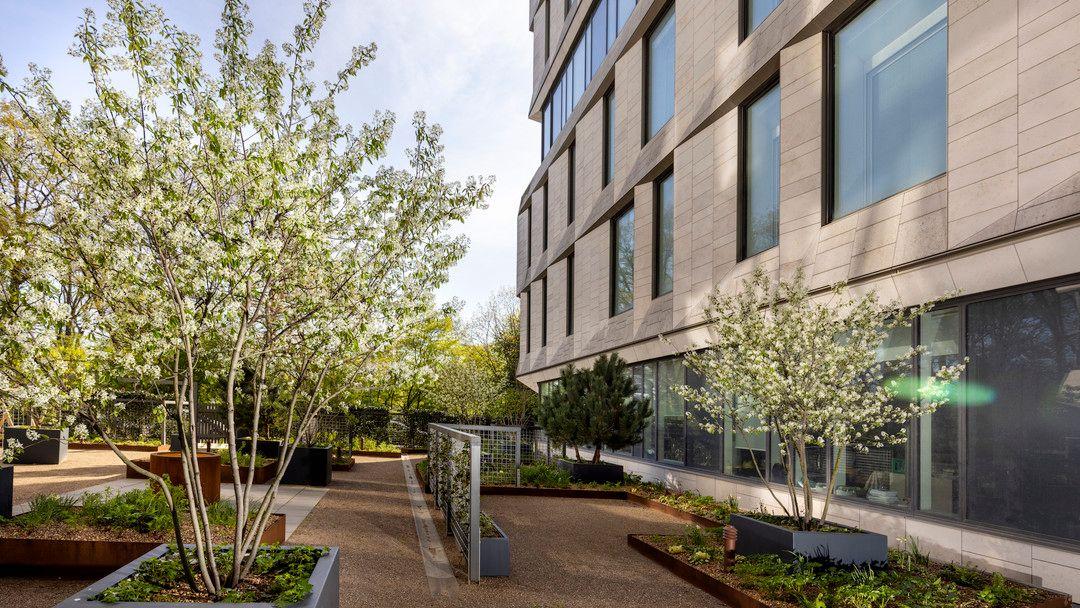
The workshops are central to the artistic research. Drawing on ancient and Indigenous memory systems, they create situations in which memories, relationships, and new forms of participation can emerge, allowing research and artworks to evolve together. The resulting sculptures, sound works, and interactive installations invite visitors to touch, turn, listen, remember, imagine, and contribute their own experiences, fostering a sense of agency through engagement with art in public space. Rather than offering fixed narratives about dementia, the project opens space for dialogue, recognising that remembering is not simply an individual act but a shared cultural practice. A map that can only be read collectively.
The workshops are central to the artistic research. Drawing on ancient and Indigenous memory systems, they create situations in which memories, relationships, and new forms of participation can emerge, allowing research and artworks to evolve together. The resulting sculptures, sound works, and interactive installations invite visitors to touch, turn, listen, remember, imagine, and contribute their own experiences, fostering a sense of agency through engagement with art in public space. Rather than offering fixed narratives about dementia, the project opens space for dialogue, recognising that remembering is not simply an individual act but a shared cultural practice. A map that can only be read collectively.
Research
The research behind the garden asks how artistic imagination can place different ways of knowing into dialogue. Drawing on neuroscience, developmental biology, anthropology, Indigenous knowledge systems, and the lived experiences of patients, relatives, clinicians, and visitors, the artworks create correspondences between body and landscape, memory and place, science and everyday life.
Building on the work of developmental biologist C. H. Waddington, a pioneer of epigenetics, Nymann draws inspiration from the concept of the creode: the pathways through which living systems gradually take shape. Waddington illustrated this idea through his famous epigenetic landscape, where marble-like balls roll through valleys, each following its own developmental trajectory. Throughout the garden, Nymann reimagines this metaphor. Instead of marbles, stones collected by patients, relatives, hospital staff, and visitors are carved into spheres and placed throughout the artworks. Rather than representing fixed outcomes, they invite visitors to touch, move, exchange, and create new connections. The stones become markers of movement, memory, and shared experience, suggesting that our lives, like landscapes, are continuously shaped through encounters.
Working closely with cognitive scientists and neuroscientists, Nymann also draws on anatomical structures of the brain. Sculptural forms inspired by the ventricular system, hippocampus, corpus callosum, and basal ganglia appear throughout the garden. Rather than illustrating neuroscience, the artworks create new correspondences between elements of the landscape and structures within our bodies. Here, waterways and neural pathways, stones and cells, landscapes and bodies, memory and place meet and flow into one another. Together, they invite visitors to see remembering not as something contained within the brain, but as something that unfolds through relationships—with other people, with landscapes, and across time. In this way, the garden becomes more than a therapeutic environment. It becomes a shared landscape for reflection, participation, and care, where scientific knowledge, lived experience, and artistic imagination meet.
Developed in close dialogue with anthropologist Joseph Dumit and tested within the art–science research network EER (Experimenting, Experiencing, Reflecting), the invitations are intentionally open-ended. They create space for different ways of remembering, sensing, and being together.
Haven
Haven is a garden designed to provide an engaging yet calm environment for people with dementia and is therefore reserved for their use. If you would like to visit, please get in touch to arrange an appointment.
Haven at Rigshospitalet
Blegdamsvej 9, 2100 Copenhagen, DK
Haven at Rigshospitalet
Blegdamsvej 9, 2100 Copenhagen, DK
Sources
Rajib Saha, Anirban Mukherjee, Aniruddha Sadhukhan, Anisha Roy, and Manashi De Department of Computer Science & Engineering, RCC Institute of Information TechnologyDepartment of Information Technology, RCC Institute of Information TechnologyDepartment of Computer Science & Engineering
Correspondances
Collaborators
Marcia Bjørnerud, Discovering the Subtle Wisdom of RocksRobert Mac Farland, Is a River AliveGilgameshThe Art of Memory, Francis YatesAby WarburgJoseph DumitEER resource website
Supported by

References
here goes a list of references
this is just a regular text